


A Perfect Storm is three forces that hit your buyers at the same time and give your value proposition its context: one injury is painful, but three at once are overwhelming. The CEOs we work with face one today: geopolitical chaos, AI changing markets faster than anyone can predict, and capital that is harder to raise than ever. To find your buyers' storm, go back to their pain, risk, strategic driver and strategic imperative, ask what is causing them globally and in their segment, and open your sales story with three of those forces so that acting now feels essential.
In October 1991, in treacherous Atlantic conditions, the fishing trawler the Andrea Gail went down with all hands. Despite having an experienced crew they had sailed directly into the storm of the century - The Perfect Storm. You might remember the 2000 movie starring George Clooney as Captain Billy Tyne Jr. which dramatizes the events.
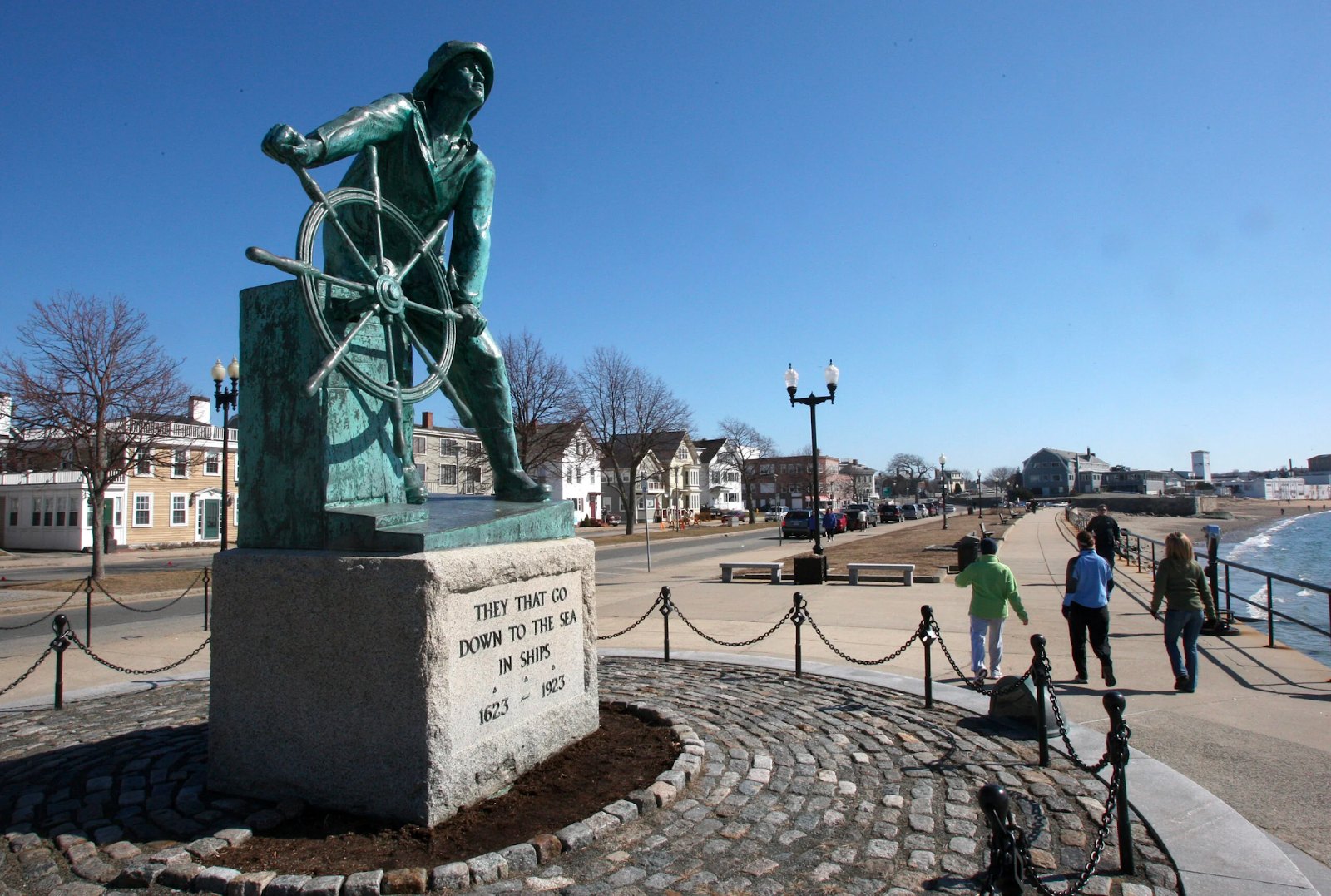
The film particularly landed with me as Elizabeth, the girls & I spent 2005-06 living in Rockport, MA, where the on-land scenes were filmed. The next city to us was Gloucester, which is where the Andrea Gail sailed from, and on the seafront there they have immortalized the crew with the Fisherman’s Memorial - a poignant reminder of the unforgiving nature of the storm.
A Perfect Storm is not just an accidental description, it has a clear meteorological meaning. A true Perfect Storm is the rare and treacherous collision of three distinct weather systems:
When these three rare phenomena happen simultaneously, you better not be there, because the consequences do not bear contemplating.
Just as in life, in the context of B2B, Pain is what causes us to act. And just like life, Pain has a cause. But when there are multiple causes, a Perfect Storm - we feel that Pain with an incomparable intensity. One injury is painful, two injuries are serious, but three injuries are overwhelming.
So what are the three injuries that give context to your product offering? What are the three injuries that cause your prospects to act with urgency? In other words, what is The Perfect Storm that gives meaning to your offering?
Andy Raskin wrote probably the most famous blog post on the subject of the Perfect Storm. It's called The Greatest Sales Deck I've Ever Seen.
In the post he quotes Hollywood screenwriting guru Robert McKee saying, “What attracts human attention is change. If the temperature around you changes, if the phone rings - that gets your attention. The way in which a story begins is a starting event that creates a moment of change”. And that's what the Perfect Storm does for your sales presentation. It's the idea of a Paradigm Shift - something dramatic in the world has changed. And inside this new context, some organizations will win, and some organizations will lose. In other words, how your prospect responds to this Perfect Storm defines whether they win, or whether they lose.
A Perfect Storm is the turbulence that causes your product to have context. So as a CEO or revenue leader your job when turning the Pain into a Message is to deep-dive for the broad context that gives meaning to your product. You are looking for three layers - just like the weather systems that we spoke about earlier - the meteorological events that when aligned to cause a Perfect Storm make it next to impossible not to buy your product.
Let’s talk about a real world example. The CEOs we work with today face three Storms at once: geopolitical chaos, AI reshaping the landscape faster than anyone can predict, and capital that is harder to raise than ever. Any one is hard. Together, they are a Perfect Storm. COVID was an earlier Paradigm Shift. One that everybody recognizes - everything changed. But what was the impact of COVID on our business operations?
As revenue leaders, when a Paradigm Shift happens, we need to be able to find a way to describe the Perfect Storm that has caused the world to change; we are describing why we exist in order to solve the Pain that has arisen as a consequence.
If we are to truly land the idea that we are Mission Critical & Rare, we have to be able to describe the context which brings meaning to our offering. So what are those three weather events for you and your solution? If you are going to persuade budget holders, particularly during the current economic headwinds, that you are an essential purchase - you need to be able to articulate the win/lose scenario created by the Perfect Storm.
There are four steps to nailing this. Return to:
Let’s return to the example of chest pain that we used a few months back.
The Storms
Now, any one of these is hard. But all three can feel insurmountable - we feel desperate, maybe we are depressed. Anyone who can offer us a way out will be listened to.
Thanks for reading. If your numbers aren't where they need to be and you're not sure why, the Unit Economics Calculator sets them against 2026 benchmarks for companies your size and shows what to do next. Questions? Email pete@revelesco.com.
See everything in Insights.
Tell us what is happening with your revenue, and talk it through with Pete or Emily.

[ Revenue insights ]
Concise and digestible. Revenue deep-dive analysis for B2B SaaS CEOs, Founders & Revenue leaders.


Design by V. Bakhal


