


Parity means keeping pace with your competition: you are not rewarded for it, but you are punished without it. It is one of the five layers of an Immunity strategy, alongside Category, Criticality, Rarity and Matrimony. We build a Parity strategy from three elements: a Future Vision of what the market will treat as table stakes in 12 months, two years and five years; an Exit Vision of what an acquirer will need to see; and Neutralization, which keeps those minimum standards on the product roadmap. The test for any feature is whether you would lose regularly with your ICP without it.
In the previous article I started a deep dive on Immunity. It sits in Diagnose & Align, the first phase of Whole Revenue Strategy, where we work out what makes your product critical and rare, and how you win your Category.
And then I went dark for a few months.
Request your place at the Whole Revenue Summit, Tarifa, May 2027
Before we discuss Parity, a quick reminder - there are 5 layers to an Immunity Strategy:
Immunity is a fundamental strategic component when building a predictable SaaS model. Rather than the old fashioned approach of “defensibility” or digging a “moat”, both of which suggest running for cover while someone stronger goes about winning, instead an Immunity strategy inoculates against attack, allowing you to focus on building the best product in the category.
The 5 layers are:
You can read more about Criticality, Rarity & Category via the links above. Let’s turn to Parity.
In this context Parity means keeping pace with your competition. You don’t get rewarded for your Parity Strategy, but having one prevents you from getting punished.
Perhaps the best known example is the baggage carousel after a flight. No one ever leaves the airport raving about the amazing airline that delivered your luggage back to you. It’s a feature we just expect to work.
But if your baggage doesn’t show up - as happened to me on the way back from Tromso last year; and on the way to Dallas actually. Top tip: don’t fly with me! - if your baggage doesn’t show, you get angry, frustrated, emotional & stressed. You only notice when the feature isn’t there, or doesn’t work.
We see how this plays out most clearly in the auto industry. New groundbreaking features tend to get introduced in high-end vehicles. The Mercedes S-class is particularly cutting edge in this regard. ABS brakes, parking assist and a host of other features all debuted in the S-class and were at one point the height of innovation. Their presence was a high value contributing factor when buying the car. In 1996 park assist was a feature firmly sat in the Rarity corner of the Immunity Radargram. You could only get it in the new Merc.
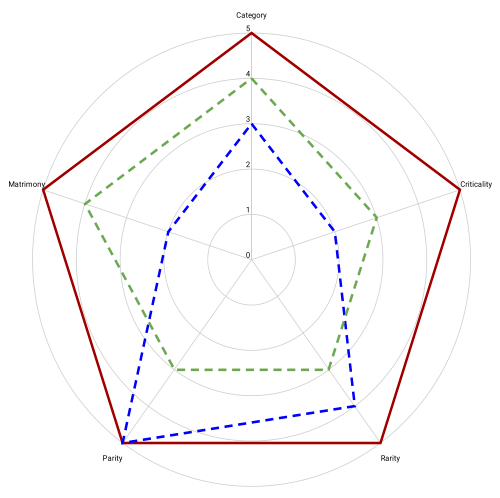
My daughter got herself a second hand Peugeot just after Christmas. Not only did it have park assist - she didn’t even want to consider a car without park assist. In less than 30 years park assist has crossed over from Rarity to Parity.
In SaaS we need to predict what will enter the Parity zone in the future so we don’t lose out on new clients for failing to have a feature the market has decided is important. We will rarely win because we have this feature, but we may well lose because we don’t have it.
The question we have to ask ourselves is this: Do we believe we will lose regularly with our ICP if we cannot do this?
If the answer to this is yes then, without wishing to bloat our product with non-core features, we must consider building regardless.
Imagine you created a new pipeline management product today to compete with Salesforce & Hubspot. No one will thank you for adding a configurable Sales Stages feature. But leave it out and the market will most likely be confused and choose an alternative. The feature is now table stakes.
So what must you consider to develop a Parity Strategy? There are 3 elements:
Fundamentally this means understanding what you believe the shape of the market will be in the future.
What developments will have occurred? Which categories will converge? What will changes in technology mean for the segment? How will the needs of your ICP shift as the market matures?
This is incredibly hard to do, but strong companies get this right. While great companies bend the market to their vision & persuade their ICP that the way they see things is the right way.
Think Steve Jobs removing the keyboard from the cell phone. Apple‘s vision of the future shaped the market. And removing the keyboard became table stakes if you wanted to even consider competing. Anyone remember Blackberry?
By assessing what your market will look like on a 5 year, 2 year & 12 month time horizon you allow yourself to get ahead of the curve & understand what will be considered table stakes in the future.
At Revelesco we frequently work on this with great SaaS businesses. We are looking at it right now with an HRtech company. They believe that the Category they operate in today will in itself become table stakes, it will move toward commoditisation, prices will drop; and differentiation will become hard to achieve. They are preparing for a very different future, which they are working toward through their Criticality & Rarity strategies. Meanwhile they don’t want to be stung by failing to deliver the basics well. In having a clear view of the shape of the future, they can understand what their Parity Strategy needs to be.
Many of us are working on this right now due to the AI paradigm shift. AI is causing such a seismic change in the way that business is run that many of us are actively trying to understand that the future looks like. Those of us that get it right will be able to prepare for taking advantage of the new paradigm. Those that don’t focus on this, put themselves in danger of decline.
What will make you attractive to an acquirer? You may or may not care too much about this right now, but if you’re venture backed there will come a point about 8-10 years in when this will become vital.
While you must never build for this purpose alone, it cannot be ignored. Perhaps there is a current partner or customer that may want to buy you. Maybe a major tech firm needs to add your product to its offering. Maybe your category is in the process of having the leading players with the most market share get snapped up by larger businesses or by private equity. In each case, are you prepared for what they will need to see?
We have a client who sold their last business to one of the FAANG 5, who of course just wanted to bring our client’s tech in-house and immediately took the product off the market. Their successful exit was partially driven by understanding how they would look as an M&A target.
While it should never be top of your list, understanding who these organizations are and ensuring you are able to play into the direction they are heading in is an essential part of the Parity play.
Once you have understood where the market is going, through the two lenses above, you can move on to the design phase. This is where you take the observations from your Future Vision & your Exit Vision and ensure your product never neglects, no matter how innovative you may want to be, the minimum standard required of it.

Neutralization can be broken down into 5 considerations:
Features - what we must deliver (a baggage delivery process).
Benefits - the value we create (the baggage delivery is timely, and never fails to arrive).
Expertise - why we should we trusted (the lowest lost baggage stats in the industry).
Partnerships - we are part of a trusted ecosystem (my bags are covered with Amex & in the event of a loss I get an immediate payout).
Competitive Set - our competitors’ innovations that we must not ignore or get left behind on (trackable tags added to each bag at checkin).
In staying on top of these 5 considerations we are able to wrap Neutralization into our ongoing product roadmap, ensuring that we never end up neglecting table stakes.
Remember your Parity Strategy will not enable you to win, instead it protects you against defeat. This gives you the baseline protection you need to deploy your Criticality & Rarity Strategies which do enable success.
Consider your answers to these 5 questions:
How will the needs of your ICP shift over the next 2 years?
What do you believe the perfect product will look like to serve these changing needs?
What will the new normal look like? Is there value that will be taken for granted that you cannot afford not to provide?
What will be necessary to be attractive for future exit activity?
And most crucially, what are the non-negotiables that you must deliver even though you will not be rewarded for them by the market?
Thanks for reading. If you're not sure which of these is holding you back, email me at pete@revelesco.com and we'll talk it through.
See everything in Insights.
Tell us what is happening with your revenue, and talk it through with Pete or Emily.

[ Revenue insights ]
Concise and digestible. Revenue deep-dive analysis for B2B SaaS CEOs, Founders & Revenue leaders.


Design by V. Bakhal


