


A Success Framework is the fourth step of the Raskin Narrative, the sales deck structure we built on Andy Raskin's work: in a few labeled steps, it shows prospects what the winners in their market do to succeed. We base it on the four elements of Sun Tzu's The Art of War (assess, configure, time to act, and a stratagem that maps to your product but stays out of the deck), and on ten questions about the buyer's strategic imperative, risks and pains. Done well, it makes you a strategic partner rather than a vendor, and the buyer asks, 'How can you help with this?'
Ever been shopping for a new car? Or even just fancied a bit of tire kicking cosplay at the Aston Martin showroom? What do you want to hear from the salesperson? A detailed summary of how a V12 engine works? Or do you want to feel a sense of luxury, a sense of speed, of having achieved your goals? Unless you’re a real car nerd it’s probably the latter.
Back in the day, sales old timers used to call this selling the sizzle not the sausage. i.e How will having the car make you feel (razzing up the seafront imagining the crowd swooning at your prowess) versus describing the vehicle.
In B2B SaaS we like to think we're more sophisticated than this, but the essentials remain the same. Your buyer doesn't want the spec sheet. They want to see a route to winning in their market. A Success Framework gives them that, and it sits at the heart of Clarity, one of the four building blocks of Whole Revenue Strategy: telling a story that explains your value clearly. And there is a specific spot in the sales process where we can land this sizzle. You might recall several months ago we spent two articles running through the Raskin Matrix. I named this framework after Andy Raskin, because I have built on top of his thinking in order to help Revenue leaders structure their own version of the Raskin presentation.
Here’s a quick reminder of the Raskin deck and why it works so effectively. The goal is to lower the Buyer Defenses and nudge them to ask for the pitch. i.e. “Wow that’s fascinating, can you show us how you help with this?” etc.
Raskin’s structure runs through five steps, each of which needs to be delivered correctly.
We are going to focus our time here today on Step 4. I have a slightly different interpretation of this to Raskin (he calls this the Magic Gifts i.e. when you wave your wand, what do they get), and when I am working with high growth SaaS businesses we tend to pull this step out and take a whole afternoon working through it as for me it’s the strongest component to really blow the mind of the prospect you are sitting in front of.
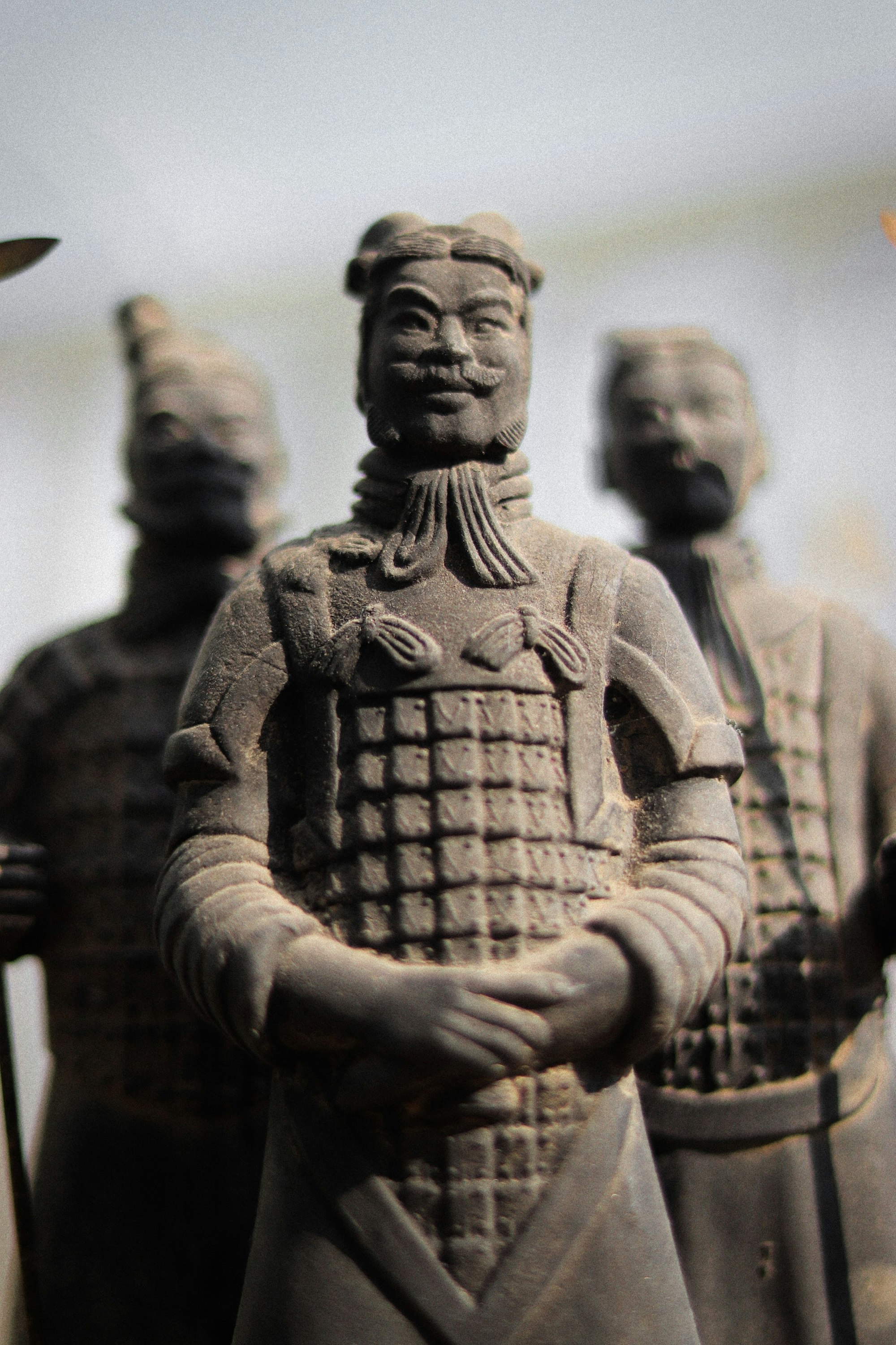
Sun Tzu’s thinking is my favorite example of a Success Framework and the strategic insight it delivers to any leader, not just to a military commander. In The Art of War he first defines the Common Thread - that the winners successfully understand their enemy’s center of gravity and the center of gravity is always the enemy’s mind & their morale. This in itself is Paradigm Shifting as most military commanders start instead from the idea of force & confrontation.
He then defines four elements that, when executed well, deliver victory.
In his case each is captured in one Chinese character, which makes them hard to translate. Here they are summarized in English by Victor H. Mair, arguably the best of the English translators:
So if you want to win a conflict, these are the headline labels which need to be mastered to ensure Success.
Racing forward several thousand years, this is what I would call a Success Framework. In other words, in B2B SaaS: what must our prospects do in order to win in their market? It is our job to come up with this for them in order that they can perceive a route to being a Winner, and not a Loser. When presented to them they should respond in one of two ways:
In accomplishing this we position ourselves not as vendors at all, but rather as strategic partners. This has some rather pleasant side effects:
However the most vital thing it does for us is shatter the “buyer beware” defenses at the most important juncture. When the Buyer Defense crumbles this is the moment when their response shifts from “send us a deck”, to; “can you tell us how you can help us with this”. In other words it’s the invitation to pitch that we require if we are to maximize our chances of winning their business.
So what’s the framework for a Success Framework!? How do you go about building one that achieves all the things we have discussed above?
I always start with these ten questions. These are the questions we can ask that will help us get to the root of the Success Framework:
I didn't use Sun Tzu's framework by chance. It's the foundation for the Success Framework. Let's restate it in slightly different language:
Let’s finish by translating this into a B2B example. We will return to the made up example I have used throughout these articles.
Imagine one more time, that we run a marketing focused SaaS business which helps optimize & prioritize inbound leads.
Our product is used by marketing managers to automate lead-flow. We have a Risk that we will be considered too low level for the CMO to want to spend time on this problem. Probably one of the advantages that a marketing manager would appreciate is the time saving we can provide but this is unlikely to excite a CMO unless we get lucky and they happen to be on a time & efficiency drive.
So for our example maybe we come up with the following:
CMOs at SaaS Businesses between Seed & C Round have 6 steps they simply have to nail if they are going to deliver on their organizations strategic objectives.
Predictability, Control, Understanding, Velocity, Repeatability, Scalability.
The first of these is Predictability - for an organization to have forecastable cashflow, a believable pipeline, and consistent sales they have to deliver a Predictable baseline. This means knowing precisely who are we targeting on an ongoing 12 month time horizon, knowing how we deliver our messaging to them, staying ahead of our competitors messaging, and ultimately enabling the sales leader to have 3-6 months of foresight of what is coming down the line.
But that in itself is not enough. Before we can do that we need Control at every stage. So that means control of costs - our CAC must be permanently managed. We can never deliver Predictability with an absence of Control.
Control of course is critical, but completely impossible without Understanding. And that means being permanently on top of market trends, shifts in channel efficacy, real time monitoring across multiple geographies, markets, currencies, and a host of other hard to monitor variables.
But even Control is not enough. To truly achieve Predictability we need to layer in Velocity. Velocity is the component by which we know we have Leads with the correct potential ACV, that will close inside the right timeframe, are delivering sufficient & sustainable SQOs, and indicate that they will close at the correct ratio.
Delivering these three critical elements allow us the possibility of Predictability.
I’m not going to continue with this entirely made up example but hopefully you can see that as we layer each new element we look like we have a clear understanding of how to win in their market, while simultaneously landing that there is a very high risk of failure. Finally we have shown that there is a route to win, but it’s not straightforward - it will take application & effort. The natural assumption is that we are uniquely able to help with this.
Now our product is not a tool to help marketing managers save time, it’s a critical component for CMOs to deliver Predictability, which leads to investment, to growth and to their own personal success.
That in turn means they will now give us the response we need - “How can you help with this?”
If your pitch isn't landing and you're not sure why, email pete@revelesco.com and we'll talk it through.
See everything in Insights.
Tell us what is happening with your revenue, and talk it through with Pete or Emily.

[ Revenue insights ]
Concise and digestible. Revenue deep-dive analysis for B2B SaaS CEOs, Founders & Revenue leaders.


Design by V. Bakhal


